


Why Paint Peels in Bathrooms and How to Prevent It in Middletown, DE
Updated: Sep 4

Bathroom paint has a harder job than paint in most other rooms.
Showers create humidity and condensation. Walls and ceilings experience repeated temperature changes. Surfaces may be cleaned frequently, and plumbing fixtures introduce the possibility of leaks.
But moisture is not the only reason bathroom paint fails.
Peeling can also result from poor preparation, painting over an unstable coating, applying paint to a damp or contaminated surface, or failing to correct damaged drywall before repainting.
For homeowners in Middletown and surrounding Delaware communities, understanding why paint peels in bathrooms is important because simply adding another coat of paint may leave you with the same problem again.
Here are the most common conditions to evaluate before repainting.
Why Paint Peels in Bathrooms
Peeling occurs when the paint film loses adhesion to the surface underneath it or to an earlier layer of paint.
Sherwin-Williams identifies several potential causes of peeling, including:
excessive moisture
plumbing or building leaks
painting over wet surfaces
painting over dirty surfaces
painting over glossy surfaces without appropriate preparation
previous coatings that already have poor adhesion
That means there is no single cause for every peeling bathroom.
The correct repair starts by determining why the coating released.
1. High Humidity and Condensation
Bathrooms regularly produce moisture.
A hot shower can quickly increase humidity, and water vapor may condense on:
ceilings
exterior-facing walls
windows
mirrors
trim
other cooler surfaces
When moisture exposure is excessive or persistent, it can contribute to paint adhesion problems.
Sherwin-Williams specifically identifies showering and excessive indoor humidity as possible causes of moisture-related interior peeling.
What helps?
EPA recommends using bathroom exhaust fans or opening windows when showering to help control indoor moisture. Bathroom exhaust should discharge outside rather than into an attic or other enclosed area.
The goal is not simply to make the mirror clear faster.
It is to remove moisture from the room.
2. A Plumbing or Water Intrusion Problem
Not every bathroom paint problem is caused by normal shower humidity.
Sometimes water is entering from somewhere it should not.
Possible sources include:
plumbing leaks
tub or shower leaks
failed plumbing connections
water entering from another room or floor
roof or exterior leaks affecting the area
Signs that deserve closer attention include:
yellow or brown staining
soft drywall
swollen drywall
recurring stains
paint that repeatedly bubbles in the same area
damp surfaces
deteriorated drywall paper
Paint comes later
If an active water source exists, the correct sequence is:
Identify the source → correct the source → allow materials to dry → evaluate damaged material → repair or replace as appropriate → prepare → prime/paint
EPA recommends correcting leaks quickly and thoroughly drying damp materials.
A fresh coat of bathroom paint cannot repair an active leak.
3. Painting Over a Damp Surface
Even if the moisture problem has already been corrected, the surface still needs time to dry.
Painting drywall or another substrate while it remains damp can interfere with coating adhesion.
That can lead to:
bubbling
blistering
peeling
uneven finish
recurring coating failure
Before repairing and painting a previously wet area, the underlying material should be evaluated.
If drywall has become:
soft
swollen
crumbling
substantially deteriorated
it may require partial replacement rather than simply drying and repainting.
This is where drywall repair and interior painting often need to be coordinated.
4. Poor Surface Preparation
Bathroom walls collect more than moisture.
Depending on the room, surfaces may also contain:
soap residue
hairspray
cleaning products
dust
oils
old paint
patching material
glossy coatings
New paint needs an appropriate surface to bond to.
Painting directly over contamination or an unstable coating can contribute to adhesion failure.
Sherwin-Williams lists dirty, wet, glossy and poorly adhering existing surfaces among potential causes of paint peeling.
Preparation may include
Depending on the condition:
cleaning the surface
removing loose paint
sanding appropriate areas
repairing damaged drywall
feathering repair edges
removing dust
allowing repairs to dry
priming where appropriate
Preparation depends on the actual surface condition and the coating system being used.
5. Painting Over Old Peeling Paint
This is one of the easiest mistakes to make.
If an existing paint layer is already loose, applying new paint over it does not restore the bond between the old coating and the wall.
The new paint may initially look better.
But if the layer underneath continues releasing, both coatings can come away together.
Loose and poorly adhered coating should therefore be addressed before repainting.
Sherwin-Williams recommends removing peeling paint, preparing the underlying surface and priming where appropriate after the moisture or adhesion problem has been corrected.
6. Previous Drywall Repairs Were Not Properly Finished
Sometimes what appears to be a paint problem actually begins with the surface underneath it.
Examples include:
poorly sanded patches
exposed joint compound
damaged drywall paper
old tape repairs
uneven patching
repaired water damage
These areas may absorb coatings differently from the surrounding painted wall.
That can make a repaired area:
flash
look dull
show a different sheen
remain visibly uneven
Proper drywall repair should happen before the finish coat.
Correct sequence
Repair → dry → sand → clean → prime as appropriate → paint
Paint cannot make a poorly finished drywall patch flat.
7. The Existing Paint Has Poor Adhesion
Sometimes the current coat is not the original problem.
A previous paint layer may already have weak adhesion.
This can happen when earlier coatings were applied over:
contamination
glossy finishes
unstable paint
inappropriate surface conditions
When another coat is added, the failure can occur between older layers rather than between the new paint and the wall.
That is why inspecting the surrounding coating matters when peeling is present.
Sherwin-Williams recommends checking adhesion around the failed area rather than assuming the peeling stops exactly where the visible damage ends.
8. The Paint Product May Not Fit the Environment
There is no rule that every bathroom must automatically use satin or semi-gloss paint.
Modern coatings vary significantly.
Some matte, eggshell, satin and higher-sheen products are specifically formulated for areas that experience greater moisture or cleaning.
The better rule is:
Choose a coating whose manufacturer recommends it for the surface, environment and expected use.
Consider:
moisture resistance
washability
mildew resistance where applicable
sheen
substrate
ventilation
manufacturer instructions
Product selection matters, but no paint can compensate for an unresolved leak or failing substrate.
Why Does Bathroom Ceiling Paint Often Peel First?
Bathroom ceilings are common trouble areas because warm, moist air rises.
Condensation can form on the ceiling, especially when:
ventilation is limited
the room remains humid after showers
ceiling surfaces are cooler
repeated condensation occurs
You may notice:
peeling above the shower
bubbling
staining
flaking
paint separating along old repairs
But location alone does not prove the cause.
A stain on a bathroom ceiling could also result from:
plumbing above
roofing
another water source
The source should be determined before repainting.
Is Bubbling Paint Always Caused by Moisture?
No.
Moisture is a major possibility in bathrooms, but bubbling or blistering can also involve coating adhesion or preparation problems.
Ask:
Is the wall wet or damp?
Is there staining?
Does it occur after showers?
Is the drywall soft?
Is there plumbing nearby?
Was the area previously repaired?
Is the old coating loose?
The pattern provides clues, but an image alone may not establish the cause.
Should You Paint Over Bathroom Water Stains?
Not until you know why the stain occurred.
A stain may remain even after the moisture source has been corrected.
In that situation, appropriate stain-blocking primer may be useful before the finish paint.
But if the stain is still changing or the area remains damp, covering it is premature.
Correct order
Stop water source → dry → evaluate substrate → repair → stain-block where appropriate → repaint
What If the Drywall Feels Soft?
Soft drywall requires more attention than peeling paint alone.
Drywall that is:
soft
swollen
crumbling
badly deteriorated
may not provide a suitable surface for a cosmetic patch and new paint.
Partial drywall replacement may be more appropriate.
That does not necessarily mean replacing the entire wall.
Often, only the affected section needs to be removed and repaired.
For more information, see our guide: Drywall Repair or Replacement: How to Tell What Your Wall Needs
What If You See Mold?
Painting over visible mold is not the correct repair.
EPA states that moisture control is fundamental to controlling mold and recommends correcting the water source and cleaning or removing affected material as appropriate before finishing surfaces.
If the affected area is extensive, contaminated, or outside the normal repair scope, an appropriate remediation professional may be required.
Important Note for Older Homes
If peeling paint must be scraped or sanded in a home built before 1978, lead-based paint needs to be considered.
EPA warns that renovation, repair and painting work that disturbs painted surfaces in pre-1978 homes can create hazardous lead dust. Contractors performing covered work are generally required to follow EPA Lead Renovation, Repair and Painting requirements.
Do not treat old peeling paint as an ordinary sanding project until the age and condition of the coating have been considered.
How to Prevent Bathroom Paint From Peeling Again
There is no single solution for every bathroom.
A more reliable approach is:
Control Excess Moisture
Use appropriate exhaust ventilation and make sure bathroom exhaust vents outside.
EPA recommends exhaust ventilation to help control moisture generated by showers.
Fix Leaks Promptly
Do not rely on paint to conceal an active water problem.
Allow Wet Materials to Dry
Dry affected building materials before finishing them.
Repair Damaged Drywall
Do not paint over soft, deteriorated or poorly repaired drywall.
Remove Loose Paint
New coatings need a stable surface.
Prepare the Surface
Clean, sand and prime as appropriate for the existing condition and selected coating.
Use an Appropriate Paint System
Follow the coating manufacturer's recommendations for bathrooms and high-moisture areas.
Can You Just Touch Up Peeling Bathroom Paint?
Sometimes a localized repair may be enough.
But several factors affect whether a touch-up will blend properly:
age of existing paint
color
sheen
lighting
repair size
surface texture
amount of failed coating
If there are multiple repaired areas or the existing coating has aged significantly, repainting a larger wall or the complete room may produce a more consistent appearance.
Bathroom Painting in Middletown, Delaware
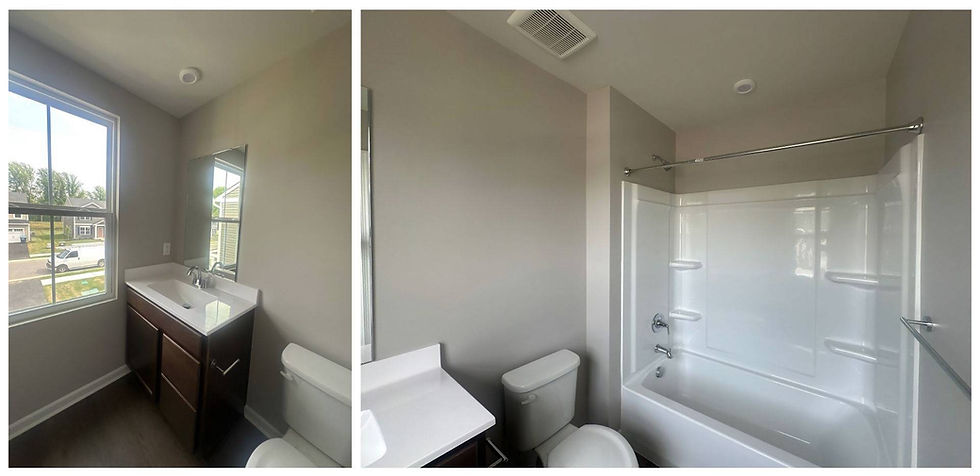
Laser Focused Solutions provides qualifying drywall repair and interior painting services for homeowners throughout Middletown and surrounding Delaware communities.
A bathroom painting project may involve:
removing failed coating where appropriate
repairing damaged drywall
finishing patches
sanding and preparation
priming as appropriate
repainting walls
repainting ceilings
trim painting
If an unresolved plumbing, ventilation, mold, or other specialized condition is responsible for the damage, that condition should be addressed before the final painting work.
Our goal is not simply to cover peeling paint.
It is to prepare a sound surface so the finished room has the best opportunity to perform properly.
Is Paint Peeling in Your Bathroom?
If you have peeling, bubbling or flaking bathroom paint, damaged drywall, failed previous repairs, or a bathroom that needs repainting after repairs are complete, Laser Focused Solutions can help evaluate qualifying work.
Call Laser Focused Solutions at (302) 316-3726 or book your free estimate online today.
We serve Middletown, Odessa, Townsend, Bear, Glasgow, Newark, Smyrna and surrounding Delaware communities.
Make memories, not home repairs.

 Trusty · Laser Focused Solutions